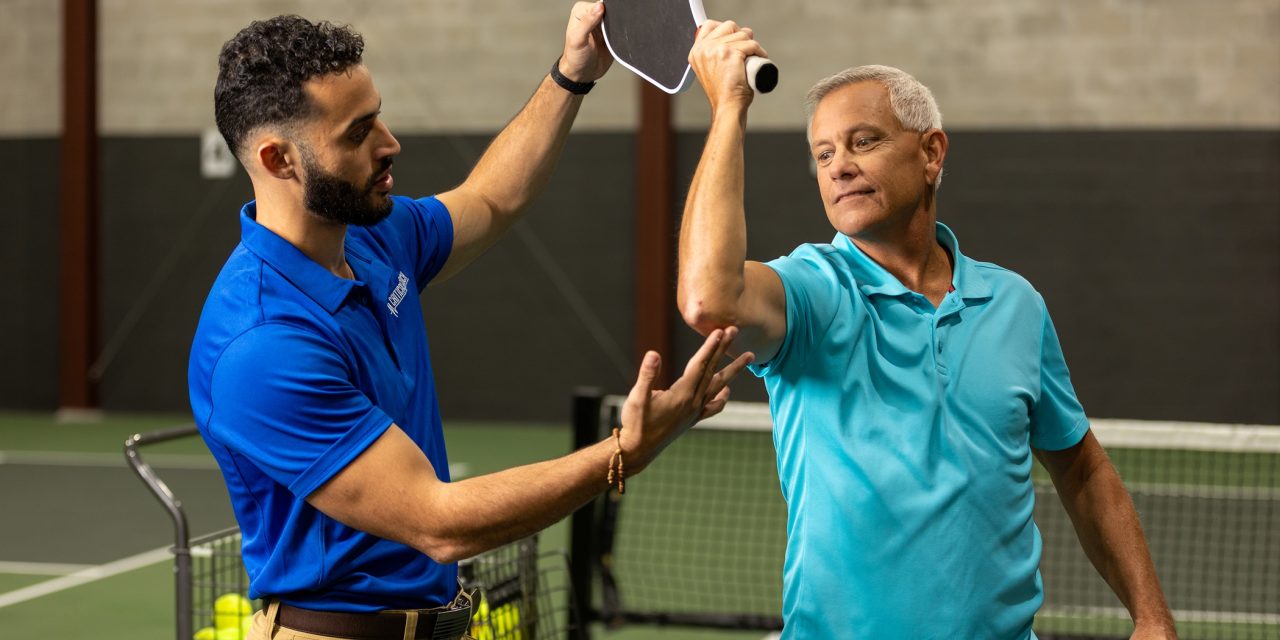
Walk onto any pickleball court before a match, and you’ll see a familiar sight: players tapping a few dinks over the net, swinging their arms in big circles, or maybe doing a quick toe touch before they jump into the first game.
It looks like a warm-up. But here’s the truth: it’s not preparing your body for the real demands of pickleball. In fact, this kind of “fake warm-up” is one of the main reasons players over 45 struggle with sore shoulders, stiff joints, and early fatigue.
If you’ve ever wondered why your shoulder aches by game three — or why you feel stiff even after “stretching” — this article is for you. Let’s break down why typical warm-ups fail and what you can do instead to feel loose, strong, and ready to play in just five minutes.
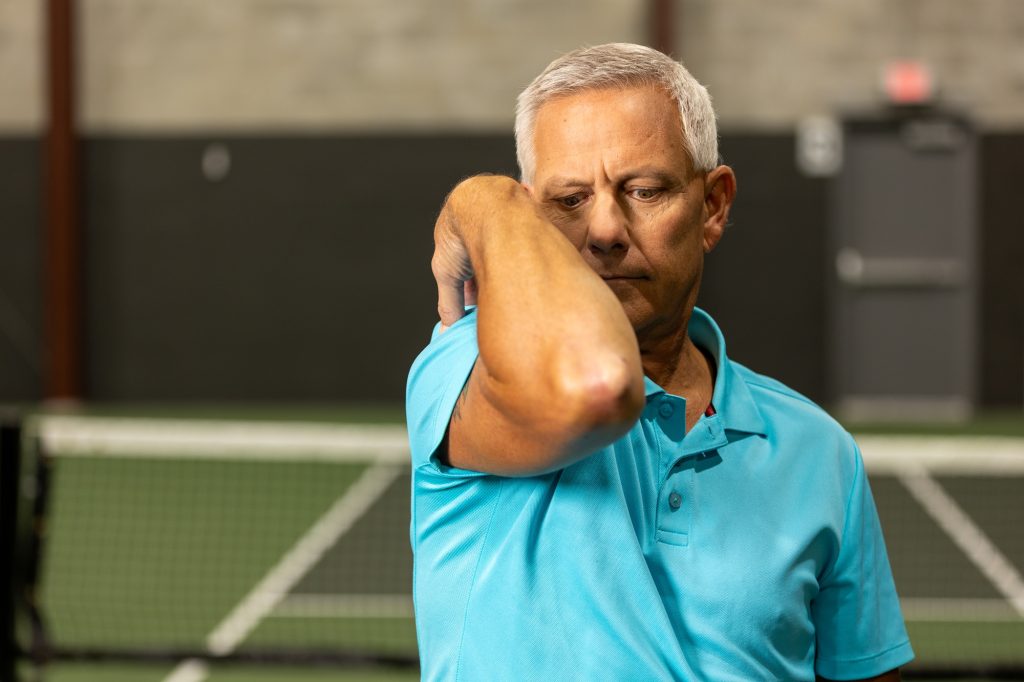
The Problem With Typical Warm-Ups
1. Skipping Warm-Ups Entirely
Many pickleball players don’t warm up at all. They arrive, chat with friends, dink a few balls, and jump right into a match. The problem? Your body is still cold. Muscles, joints, and connective tissues aren’t prepared for explosive movements. Starting cold is like revving a car engine to high speed without giving it time to warm up — eventually, something breaks down.
2. Relying on Static Stretches
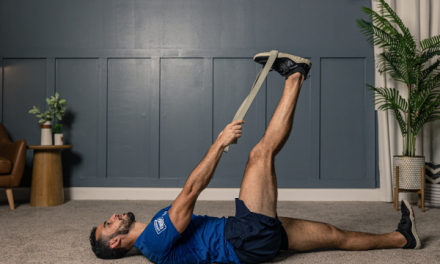
Others take a few minutes to stretch — maybe pulling an arm across the chest or reaching overhead. While static stretches can feel good, they don’t actually prepare your muscles to do work. In some cases, static stretching before activity can even reduce performance. Why? Because stretching doesn’t increase blood flow, activate stabilizers, or prime the nervous system.
3. The “Dinking Warm-Up” Myth
A few casual dinks across the net are great for hand-eye coordination, but they don’t address what your shoulders, hips, and legs need to play at full speed. Without targeted prep, you’re walking onto the court half-ready.
Bottom line: most players think they’re warming up, but they’re really just going through the motions.
What a Warm-Up Should Really Do
A good warm-up isn’t about killing time — it’s about preparing your body to perform. Done right, it should check four key boxes:
- Increase Blood Flow
Light, dynamic movement increases circulation, warms the muscles, and lubricates the joints. Think of it as turning on the body’s “power switch.” - Activate Stabilizer Muscles
Your shoulder health depends on small stabilizers — rotator cuff and scapular muscles — firing at the right time. If they’re asleep, bigger muscles take over, creating imbalance and pain. - Improve Mobility Through Range of Motion
Pickleball requires reaching, lunging, twisting, and overhead swings. Your warm-up should gently take joints through these ranges so they’re not shocked during play. - Prime Coordination
The game isn’t just about strength; it’s about timing and fluidity. A proper warm-up connects the shoulders, hips, and core, so your body moves as one unit instead of fighting itself.
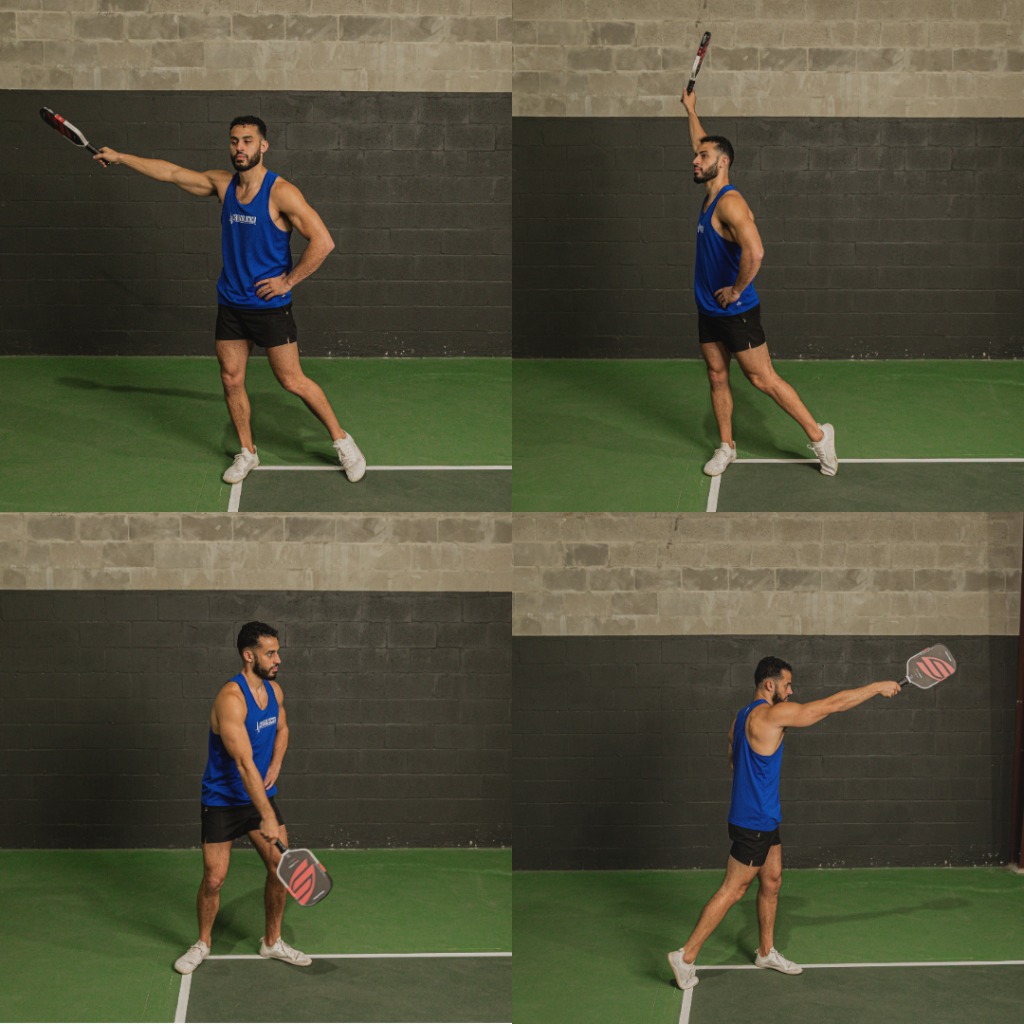
If your warm-up isn’t doing all of these things, it’s falling short.
Why This Matters Even More After 50
If you’re in your 50s, 60s, or 70s, a proper warm-up isn’t optional — it’s essential. Here’s why:
- Reduced Tissue Elasticity: Tendons and ligaments stiffen with age, making them more injury-prone when stressed cold.
- Slower Recovery: Your muscles don’t bounce back as quickly. Preparing them properly minimizes damage.
- Posture Changes: Years of sitting, driving, or phone use alter shoulder mechanics. A good warm-up helps reset posture before play.
Skipping a warm-up at 25 might mean a little stiffness. Skipping it at 55 can mean weeks of pain or even a serious injury.
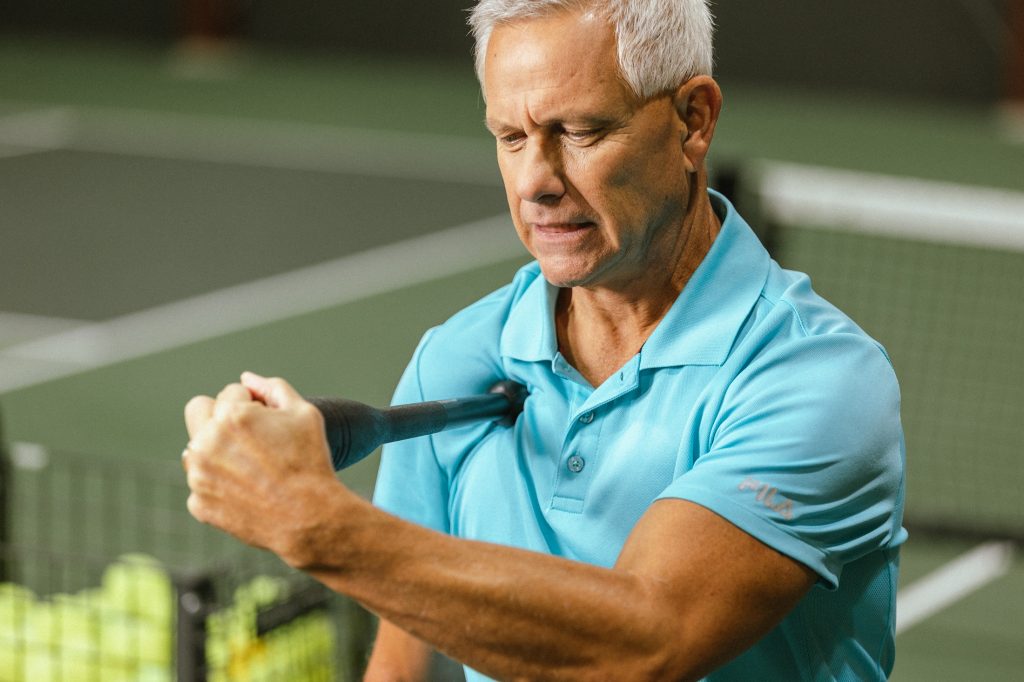
The #1 Warm-Up Move for Pickleball
[add #1 move Short – Chris will provide YT link once Short is LIVE]
The good news is protecting your shoulders doesn’t take a long, complicated routine.
In fact, it just takes a minute — right on the court, with nothing more than your paddle.
This simple movement primes your shoulders by:
- Waking up the stabilizers that protect your rotator cuff.
- Improving blood flow and joint lubrication.
- Loosening stiff tissue so your swings feel smoother.
We’ve put this exact drill into a FREE resource called Pickleball Shoulder Fix: The #1 Move for Instant Relief. Inside, you’ll see step-by-step instructions, photos, and a quick video from Coach Zach demonstrating the move so you can start using it before your very next game.
[Click here to get your free Pickleball Shoulder Fix report.]
Quick Fix vs. Complete Prep
Now, here’s the important distinction:
- The #1 move is your “emergency warm-up.” It’s quick, convenient, and shoulder-specific — perfect when you’re rushing to get on the court.
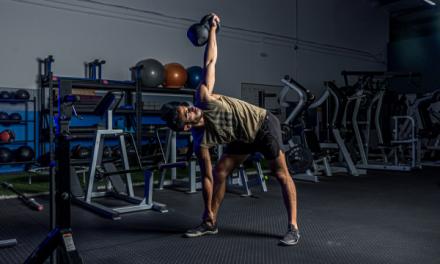
- But for the best possible performance and protection, nothing replaces a true dynamic warm-up that gets your entire body moving — shoulders, hips, core, and legs working together.
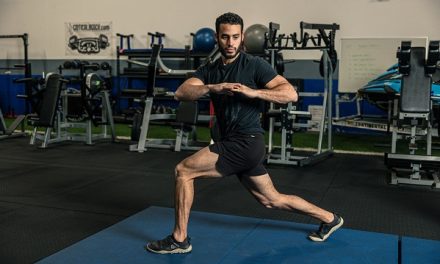
Pickleball isn’t just about the arm swing — it’s lunges, twists, quick steps, and overhead smashes. A full dynamic warm-up primes your whole system so your body feels faster, looser, and more coordinated from the very first serve.
The Science Behind Dynamic Warm-Ups
Research backs up what athletes already know: dynamic warm-ups beat static stretching for performance and injury prevention.
- Increased Performance: Studies show dynamic drills improve strength, speed, and power immediately before activity.
- Better Injury Protection: By activating stabilizers and improving blood flow, dynamic prep reduces the risk of muscle strains and joint injuries.
- Neuromuscular Readiness: Dynamic movements “wake up” the nervous system, so your reaction time and coordination are sharper — crucial for a fast game like pickleball.
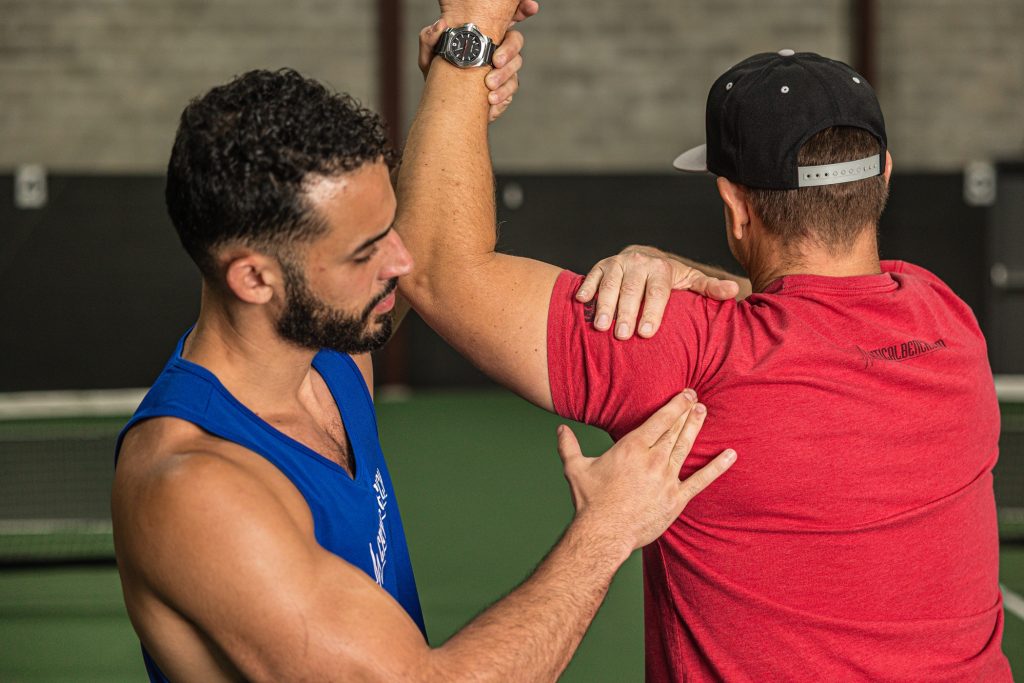
This isn’t just theory — it’s why elite athletes in every sport warm up dynamically before they compete.
Top 3 Warm-Up Mistakes to Avoid
To keep this simple and practical, here are the biggest traps pickleball players fall into:
- Thinking Dinks Are Enough
Dinking works your paddle skills, not your joints. Great for coordination, but not a substitute for shoulder prep. - Going Through the Motions
Waving your arms around without focus doesn’t cut it. Your warm-up should be intentional, with smooth, controlled patterns. - Saving Warm-Ups for Tournaments Only
Pain doesn’t care if you’re playing rec doubles or championship matches. Make warm-ups part of every court session.
FAQs: Pickleball Warm-Ups
Q: How long should a pickleball warm-up take?
A: Even 3–5 minutes can make a big difference. Consistency matters more than duration.
Q: Should I stretch after playing instead of before?
A: Yes — static stretches are best after games to relax tight muscles and aid recovery. Before play, stick to dynamic drills.
Q: Do I need special equipment for a warm-up?
A: No. Your paddle works perfectly for most flowing shoulder drills. Tools like Indian clubs can add variety and depth, but they’re optional.
Q: What if I already feel sore when I show up to the court?
A: A proper warm-up can still help by increasing blood flow and mobility. But sharp or persistent pain is a sign to scale back and address the root cause.
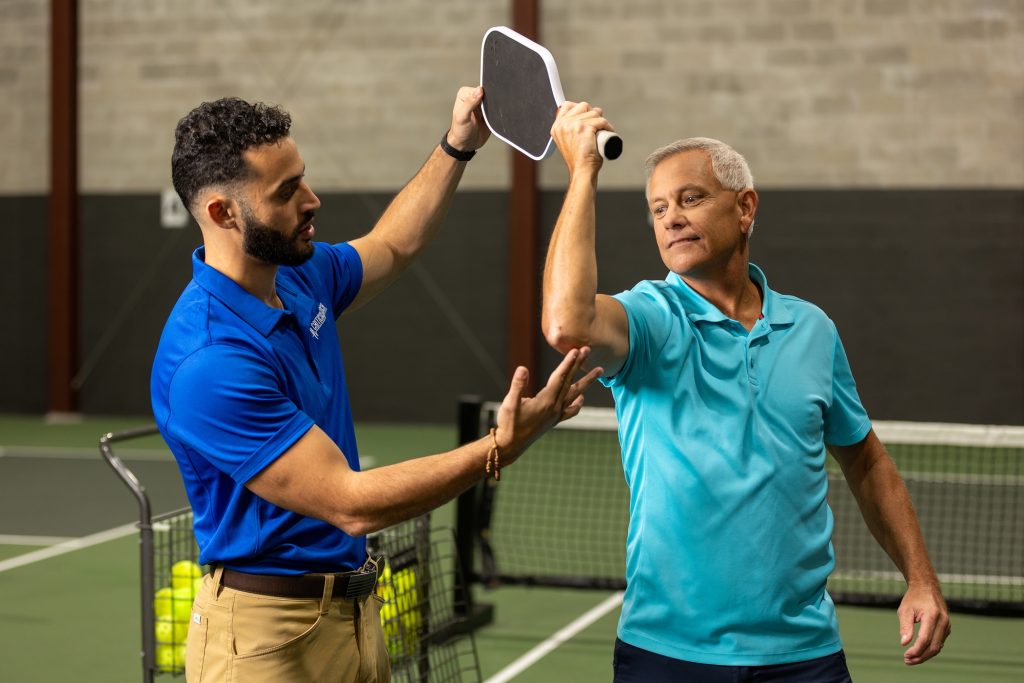
Don’t Let a Bad Warm-Up Cost You the Game
Pickleball is supposed to be fun, social, and energizing. Don’t let stiff joints or sore shoulders take that away.
If you’re over 45 and want a proven 10-minute warm-up system that goes beyond dinking and stretches, check out the Ageless Shoulders program. It’s designed specifically for pickleball players in their 50s, 60s, and 70s who want to stay strong, mobile, and pain-free.