Pickleball is supposed to be fun, social, and energizing. But nothing derails the game faster than nagging shoulder pain.
The truth is, most shoulder injuries don’t happen overnight. They build up quietly — one sore match here, one bad night of sleep there — until suddenly you’re sidelined with a bigger problem.
The good news? Your shoulder usually warns you before it breaks down. You just need to know what to look for.
Here are three red flags every pickleball player over 50 should watch for if you want to stay on the court and out of the doctor’s office.
Warning Sign #1 — Limited Overhead Reach
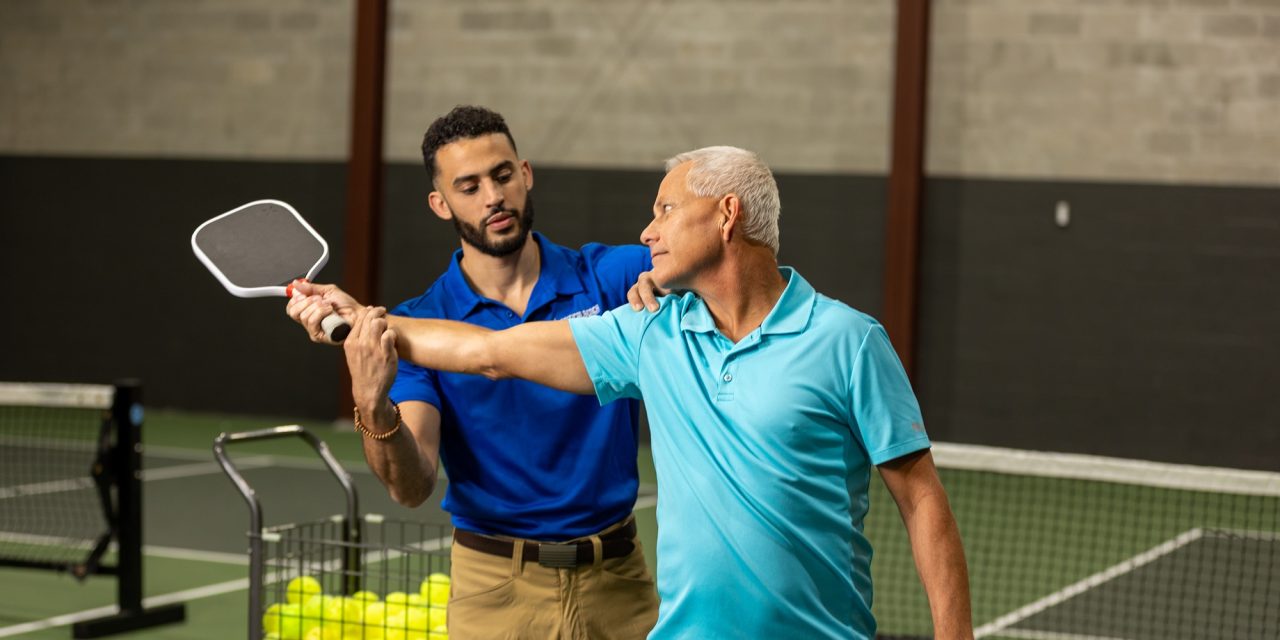
If you’ve noticed that reaching overhead feels stiff or restricted, your body is sending a message.
Maybe you can still hit a serve, but it feels tighter than it used to. Maybe your smashes don’t have the same pop. Or maybe you find yourself arching your back or twisting your torso just to get the paddle up high enough.
These are all signs of restricted mobility.
Why it matters:
- Overhead motions are a cornerstone of pickleball — serves, smashes, and even defensive lobs. If you can’t comfortably get your paddle overhead, every one of those shots becomes a strain.
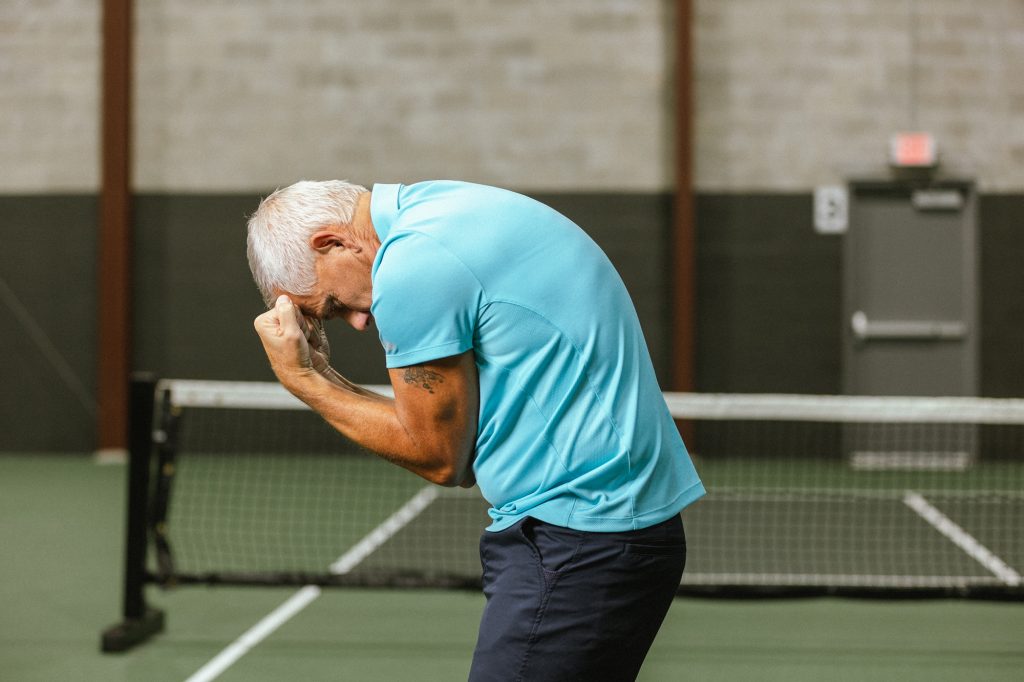
- When your shoulder can’t move freely, you start compensating with your spine, ribs, or opposite shoulder. Over time, those compensations put you at risk for strains, impingement, or even a rotator cuff tear.
- Age makes this worse: as we get older, the joint capsule tightens and cartilage thins, making overhead mobility harder to maintain. Without regular mobility work, the loss of reach accelerates.
Think of it like driving with your parking brake half on — you can still move forward, but the stress adds up quickly.
Warning Sign #2 — Pain at Night
If your shoulder aches when you lie down, especially if you can’t get comfortable sleeping on one side, that’s more than just a nuisance — it’s a red flag.
Nighttime shoulder pain is usually a sign of inflammation or irritation in the joint or surrounding tendons. And if your shoulder can’t recover while you sleep, the problem only compounds.
Why it matters:
- Sleep is when your body repairs tissue. If pain is interrupting that process, recovery slows down dramatically. A shoulder that’s inflamed at night is unlikely to be ready for a high-energy game the next morning.
- Chronic inflammation leads to scar tissue, stiffness, and greater vulnerability during play. Many rotator cuff tears start as simple inflammation that was ignored for too long.
- According to the American Academy of Orthopedic Surgeons, nighttime pain is one of the most common complaints in patients with rotator cuff injuries. It’s a strong predictor that the problem won’t resolve on its own.
Bottom line: if your shoulder is talking to you at night, listen.
Warning Sign #3 — Lingering Soreness (48+ Hours)
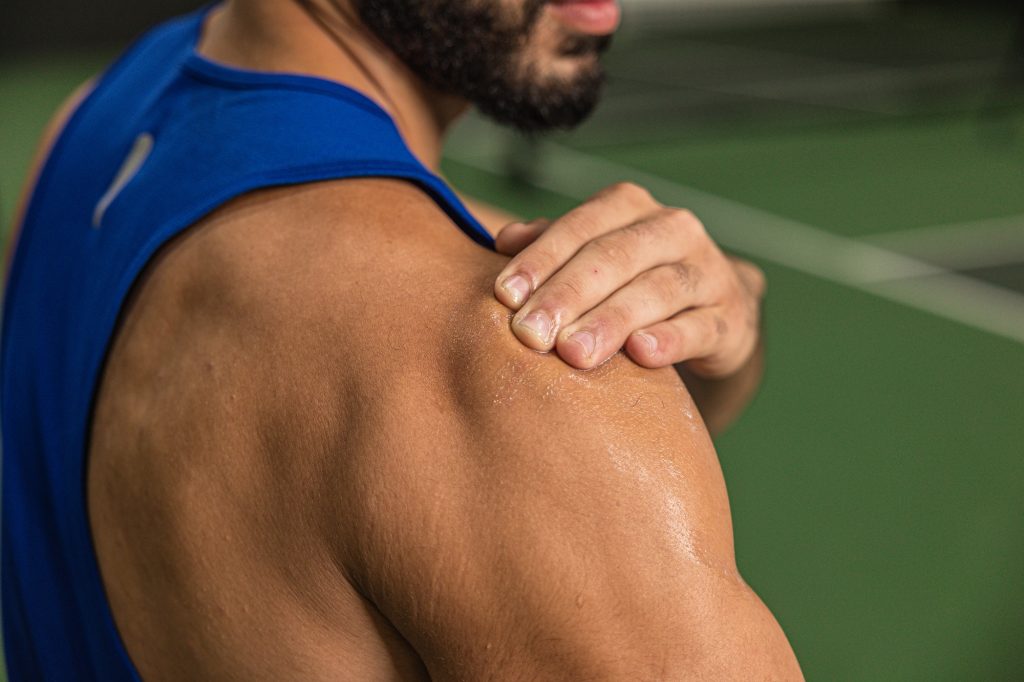
A little soreness after a long match is normal. But if your shoulder still feels sore two days later, it’s a sign your tissue is breaking down faster than it’s repairing.
This kind of lingering soreness is often the first stage of chronic irritation or tendonitis. What starts as a dull ache can progress to sharp pain, weakness, or loss of range of motion if you keep pushing through it.
Why it matters:
- Shoulders are heavily reliant on small stabilizer muscles. If they’re fatigued and not recovering, the bigger muscles take over — creating imbalance and strain.
- Repeated stress on irritated tissue accelerates wear and tear. This is why “weekend warriors” in their 50s and 60s are particularly vulnerable — long matches with no proper prep or recovery time create the perfect storm.
- In pickleball, the pace of play is faster than tennis with less recovery between points. That means your shoulder is under constant load, magnifying any imbalance.
Remember: normal soreness fades. Pain that lingers is a warning.
Don’t Ignore the Red Flags
Here’s the hard truth: these issues don’t fix themselves. Hoping the pain will go away is what sidelines too many players.
The shoulder is the most mobile joint in the body — and also one of the most unstable. Without proper mobility, stability, and prep, the stress of pickleball eventually catches up.
- Fact: A 2023 study published in Injury Epidemiology reported more than 60,000 pickleball-related injuries among older adults in a single year, with shoulder issues ranking near the top.
- Translation: This isn’t rare. If you play long enough without addressing these warning signs, odds are you’ll deal with them sooner or later.
But there’s good news: if you catch these warning signs early and address them with smart mobility work, you can extend your playing years dramatically.
Players who build resilient shoulders today aren’t just avoiding pain — they’re hitting stronger shots, reacting faster, and enjoying the game longer.
FAQs: Shoulder Pain in Pickleball
Q: Should I keep playing if my shoulder feels sore?
A: Mild soreness that fades within 24 hours is usually okay. Persistent or sharp pain is a sign you need to back off and address the root cause.
Q: Do I need to stop playing completely if I have shoulder pain?
A: Not necessarily. Adjusting your workload and adding proper warm-up and mobility drills often allows you to keep playing while you heal.
Q: What’s the difference between soreness and injury?
A: Soreness improves with rest and gentle movement. Injury pain often worsens with activity, lingers beyond 48 hours, and can interfere with daily life or sleep.
Q: Isn’t shoulder pain just part of getting older?
A: No. While aging affects tissue elasticity and recovery, pain is not inevitable. With the right prep and training, many players in their 60s and 70s play pain-free.
Q: Can equipment choices affect shoulder health?
A: Yes. Using a paddle that’s too heavy or grips that are too large can strain the shoulder and elbow. Choosing the right paddle, along with a proper warm-up, reduces risk.
Q: When should I see a doctor?
A: If pain is sharp, worsening, or interfering with daily activities, get it checked. Early medical evaluation can prevent small issues from becoming serious injuries.
The Good News
If you’re noticing these warning signs, don’t panic. Catching them now is your best chance to stay in the game.
That’s exactly why we created the Ageless Shoulders program — a proven 10-minute system designed specifically for pickleball players over 45. It restores strength, mobility, and stability so you can protect your shoulders, avoid injuries, and keep playing the sport you love for years to come.
[Click here to learn more about Ageless Shoulders.]