Most people think core training starts and ends with crunches, sit-ups, and planks.
But there’s one deep abdominal muscle that often gets completely overlooked and it could be the missing link behind poor posture, lower back discomfort, weak core stability, and even a stomach that seems to stick out no matter how many ab workouts you do.
That muscle is called the transverse abdominis, also known as the TVA.
Unlike your “six-pack” muscles, the TVA sits deep beneath the surface and acts like your body’s natural weight belt, helping stabilize and protect your spine during movement. When this muscle is weak or inactive, it can affect everything from posture and athletic performance to how your midsection looks and feels.
The good news?
With a few simple exercises, you can begin strengthening your TVA and improving your core function in just minutes a day.
How to Train Your TVA Muscle for Better Core Strength and Posture
Coach Zach Zenios breaks down exactly how to activate and strengthen your TVA using three beginner-friendly exercises that can help improve posture, support the lower back, and create a stronger, tighter midsection.
What Is the TVA Muscle?
The transverse abdominis is the deepest layer of abdominal muscle in your core.
Think of it as your body’s internal corset or “inner belt.” Its main job is to stabilize the spine and pelvis during movement while helping maintain proper posture and core control.
When functioning properly, the TVA helps:
- Support the lower back
- Improve posture
- Create better spinal stability
- Enhance athletic movement
- Assist with breathing mechanics
- Flatten and tighten the abdominal wall
Many people train their visible abs endlessly while completely neglecting this deeper layer of the core.
As Coach Zach explains in the video, you can even have visible abs while still having a protruding stomach if your TVA is weak.
Why TVA Training Matters More Than Most People Realize
A weak TVA can contribute to:
- Lower back discomfort
- Poor posture
- Weak lifting mechanics
- Reduced core stability
- A distended or protruding abdomen
- Difficulty bracing during exercise
That’s why TVA training is so important, especially as we age.
For adults over 35, maintaining strong deep core muscles becomes essential for protecting the spine during daily activities, workouts, sports, and even simple movements like bending, twisting, and carrying objects.

Signs You May Have a Weak Deep Core
You may benefit from TVA training if you notice:
- Your stomach protrudes even when you’re lean
- You struggle with posture
- Your lower back gets tight or fatigued easily
- You have trouble bracing during workouts
- Traditional ab exercises don’t seem to improve core control
- You sit for long periods during the day
Fortunately, TVA activation exercises are simple, low-impact, and easy to perform at home.
3 TVA Exercises Coach Zach Recommends
1. Standing Stomach Vacuum
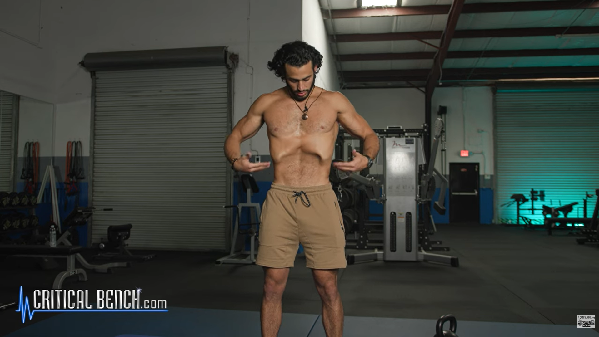
This is one of the best beginner exercises for learning how to activate the TVA.
How to Do It
- Stand tall with good posture
- Fully exhale all the air from your lungs
- Pull your belly button inward toward your spine
- Hold for 10 seconds
- Relax and repeat
The goal is to create a “hollowing” sensation through the midsection without holding your breath excessively.
Coach Zach recommends starting with:
- 3 sets
- 10-second holds
- preferably on an empty stomach.
2. Tabletop TVA Vacuum
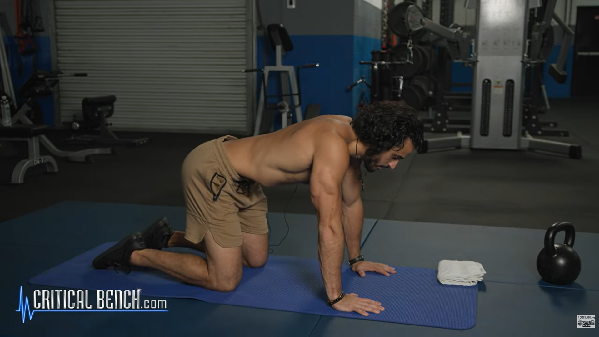
Once you master the standing version, you can progress to this more challenging variation.
By moving onto all fours, gravity creates additional resistance against your abdominal wall and internal organs, forcing the TVA to work harder.
How to Do It
- Get into a tabletop position
- Fully exhale
- Pull your belly button toward your spine
- Hold for 10 seconds
- Repeat for 3 sets
This exercise helps improve spinal support and deep core engagement while reinforcing proper breathing mechanics.
3. Kettlebell Belly Breathing Drill
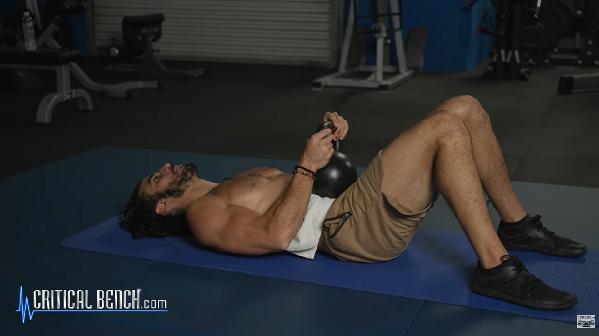
This advanced breathing exercise adds external resistance to challenge the TVA even further.
Important:
If you have high blood pressure, glaucoma, or cardiovascular concerns, consult your physician before attempting this exercise.
How to Do It
- Lie on your back
- Place a light kettlebell carefully on your abdomen
- Fully exhale
- Inhale deeply and try to raise the kettlebell upward using diaphragmatic breathing
- Hold briefly and slowly lower
The goal is controlled breathing and deep abdominal activation, not straining.
As Coach Zach demonstrates, this drill can dramatically improve awareness of your inner core muscles.
Why Crunches Alone Aren’t Enough
Traditional ab exercises mainly target the rectus abdominis which are the visible “six-pack” muscles.
But true core strength starts deeper.
Without a strong TVA:
- your spine lacks proper support
- posture can suffer
- movement efficiency decreases
- lower back strain becomes more likely.
That’s why combining TVA activation with traditional core exercises creates a stronger, more functional midsection.

Build a Stronger Core This Summer
If your goal this summer is to:
- flatten your stomach
- improve posture
- reduce back discomfort
- strengthen your abs
- move more confidently
…then training your TVA should absolutely be part of your routine.

Just a few minutes per day can help improve deep core activation and create a stronger foundation for every workout and daily movement.
And if you want a complete system for developing stronger abs, obliques, and core stability using simple equipment at home, be sure to check out Coach Zach’s core training program and slider workouts designed to help you train smarter and move better.