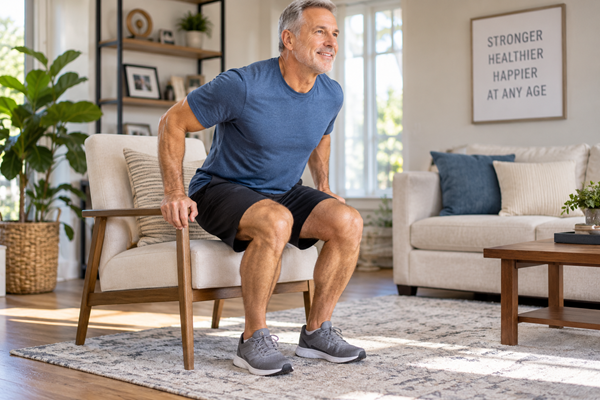
Remember when getting out of a chair required absolutely no thought? You sat down, you stood up, and you went about your day. There was no rocking forward to build momentum, no pushing off the armrests, and no pause after standing to give your hips, knees, and lower back a few seconds to loosen up.
Then somewhere along the way, something changed.
Maybe you notice it after sitting through a movie or getting out of the car after a long drive. Maybe it’s first thing in the morning, when those first few steps feel more like a warm-up than walking. Or maybe you’ve simply noticed that getting up from a deep couch isn’t quite as effortless as it was 10 or 20 years ago.
Most people have a simple explanation: “I’m getting older.”
Age certainly plays a role in how our bodies change, but there’s more going on than another candle on the birthday cake. Getting out of a chair requires a surprising combination of lower-body strength, hip mobility, balance and coordination. And there’s another part of the story most people haven’t thought about since high school biology: the fluid inside your joints.
Understanding how all of these pieces work together may change the way you think about those stiff first few steps after getting out of a chair.
TRY IT: The 5x Chair Stand Test
Getting out of a chair may seem like one of the most ordinary things you do all day, but researchers actually use this movement as a simple measure of physical function as we age.
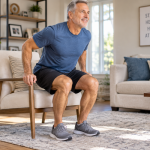
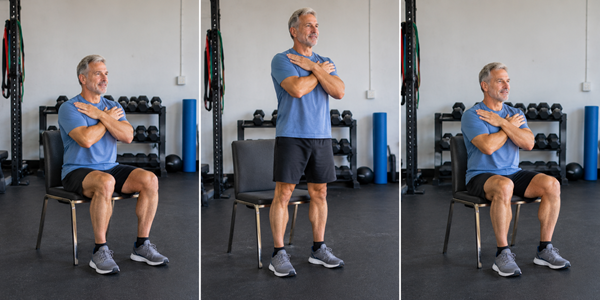
One common assessment is the Five-Times Sit-to-Stand Test. You sit in a standard chair with your feet on the floor and your arms crossed over your chest. Then you stand all the way up and sit back down five times as quickly as you safely can, without using your arms to push yourself up.
HOW TO DO IT: Sit in a sturdy chair with your feet flat on the floor and your arms crossed over your chest. Stand completely upright and sit back down five times without using your hands for assistance.
It sounds simple, but try it and you’ll quickly understand why researchers pay attention to it. Standing from a chair without pushing off requires lower-body strength, balance, coordination and enough mobility to move efficiently.
And there’s some interesting research behind it.
A 2025 study followed more than 43,000 adults age 50 and older and found that slower performance on the five-chair-stand test was associated with a higher risk of death during follow-up. A separate 2026 study followed 2,747 high-functioning older adults for 15 years and also found that slower chair-stand performance was associated with higher all-cause mortality.
That doesn’t mean your chair-stand time determines how long you’re going to live. It’s better viewed as a quick snapshot of several physical abilities that become increasingly important as we get older.
And unlike your chronological age, many of those abilities can be improved.
[Safety note: If you have significant balance problems, pain, an injury, or difficulty standing safely without assistance, don’t attempt the test on your own.]
Why Standing Up Actually Gets Harder
Getting out of a chair looks like a simple movement, but your body has to do quite a bit to make it happen.
Your feet need to provide a stable base. Your hips have to flex and then extend. Your quadriceps and glutes need enough strength to lift your body weight. Your core helps stabilize you, while your balance and coordination allow you to shift your center of mass forward and over your feet.
If you’ve lost some lower-body strength, your hips don’t move as freely as they once did, or you’ve simply become less active, standing up can start requiring noticeably more effort.
That’s when you may catch yourself rocking forward, pushing off the armrests or avoiding especially low chairs and deep couches.
And if the movement feels particularly stiff after you’ve been sitting for a while, there’s another piece worth understanding.
Your Joints Were Designed to Glide
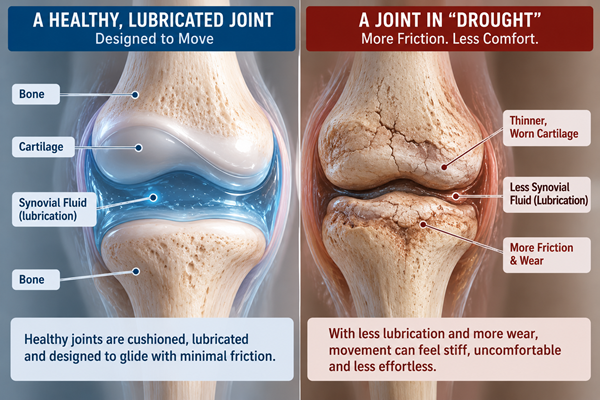
Your hips and knees are what’s known as synovial joints. Inside these joints is a remarkable substance called synovial fluid, which you can think of as your body’s built-in joint lubricant.
Synovial fluid contains several important components, including hyaluronic acid and lubricin, that contribute to the extremely low-friction environment your joints need to move smoothly. It also helps support the cartilage surfaces inside the joint and plays a role in transporting nutrients and removing waste.
In other words, healthy joints aren’t supposed to grind their way through every step you take. They’re designed to glide.
That’s impressive when you consider how much work your hips and knees actually do. Your knees may bend thousands of times during an ordinary day, while your hips absorb and transfer force every time you walk, climb stairs, bend down, squat or get up from a chair. When everything is functioning properly, you barely notice any of it.
So why can movement begin to feel so different as we get older?
What Is “Joint Drought”?
You may have heard the term “Joint Drought” used to describe stiff, aging joints. It’s a powerful visual, but let’s make an important distinction: Joint Drought isn’t a medical diagnosis. It’s a simple metaphor for understanding why the environment inside a joint, including its lubrication, matters to how that joint moves and feels.
Imagine a clear, flowing stream. Water moves freely around everything in its path, and the rocks beneath the surface remain surrounded by fluid. Now picture that same stream during a drought. The water level has dropped, the flow has slowed, and what was once a free-moving environment looks very different.
Your joints obviously aren’t tiny rivers, and synovial fluid isn’t simply water. It’s a complex biological lubricant containing hyaluronic acid, lubricin, proteins, phospholipids and other substances. But the river analogy helps illustrate an important point: the surfaces inside a healthy joint are designed to move in a lubricated environment.
Research has shown that the composition and lubricating properties of synovial fluid can be altered by joint degeneration and disease. Hyaluronic acid is particularly important because it contributes to the fluid’s lubricating and viscoelastic properties.
This is why saying stiff joints are simply “worn out” doesn’t tell the whole story. The condition of your cartilage is important, but so are the muscles and tendons surrounding the joint, your strength and activity level, and the environment inside the joint itself.
Does Joint Fluid Really Change As We Get Older?
So does the fluid inside your joints actually change as you age? The answer isn’t as clear-cut as some joint-health ads make it sound.
Some research has found age-related changes in hyaluronic acid within human synovial fluid. One study examining knee-joint fluid from adults ranging from their 20s into their 90s found an age-associated decrease in both the concentration and molecular size of hyaluronan.
Other research has produced different results. A more recent study examining normal human synovial fluid found no significant relationship between age and the levels of two major joint lubricants, hyaluronic acid and PRG4, also known as lubricin.
So it would be misleading to claim that the moment you turn 50, your joints simply begin “drying out.” Human biology is more complicated than that.
What the evidence does make clear is that joint lubrication is important, the joint environment can change with degeneration and disease, and maintaining healthy movement becomes increasingly important as we age.
The Modern Habit Your Hips Weren’t Designed For
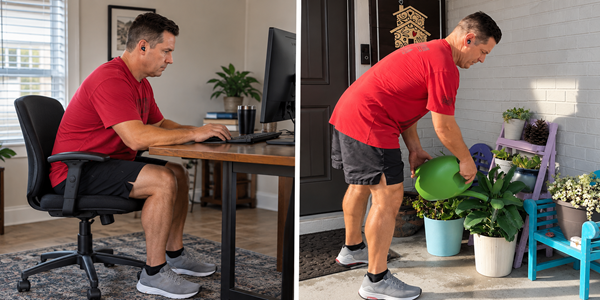
Think about how much of an ordinary day can be spent in a chair. You sit for breakfast, sit in the car, sit at a desk, sit on the drive home, sit through dinner, and then perhaps spend another few hours sitting on the couch watching television or looking at a screen.
All of that time adds up, and it means your hips may spend a huge percentage of the day in essentially the same flexed position.
Research suggests this may matter. In one study of 144 people, researchers compared sitting and activity patterns with passive hip extension. The group that was highly active and spent less time sitting demonstrated 6.1 degrees more passive hip extension than the group that was less active and spent more than seven hours per day sitting.
That doesn’t prove sitting is responsible for every stiff hip, nor does it mean sitting itself is inherently bad. But it reinforces something Critical Bench coaches have been saying for years: your body adapts to what you repeatedly ask it to do.
If you regularly walk, bend, squat, extend your hips and move through different positions, your body gets frequent opportunities to use those ranges of motion. If most of your waking hours are spent folded into a chair, it shouldn’t be surprising when standing tall and moving freely begins to feel less natural.
Why Are the First Few Steps So Stiff?
Most people over 50 know the feeling. You’ve been sitting for an hour or two, you stand up, and those first few steps aren’t exactly graceful. Your stride may be shorter, your hips or knees may feel stiff, and you may find yourself slightly bent forward until everything starts moving again.
Then something interesting happens. After you’ve walked around for a minute or two, you often begin to feel better.
There’s probably more than one thing going on. You’ve been sitting still, your hips have been held in the same position, and the muscles and connective tissues around them haven’t been moving through their usual ranges. Then you suddenly stand up and ask everything to support and move your full body weight again.
This is one reason the answer to feeling stiff after sitting isn’t necessarily to stop using your joints. In many cases, what the body needs is the opposite: appropriate movement.
Movement Is One of Your Joints’ Best Friends
There’s an old saying in the fitness and rehabilitation world: “Motion is lotion.”
It’s not a perfect scientific explanation, but it’s an easy way to remember an important concept. Movement changes the mechanical environment inside and around your joints. Articular cartilage doesn’t have the same direct blood supply found in many other tissues, and joint movement and loading play a role in the exchange of fluids and nutrients that help support cartilage.
Movement also keeps the muscles surrounding your joints doing their jobs. Around the hips, that includes your glutes, hip flexors, adductors, abductors and several smaller muscles that help control and stabilize movement.
You don’t need to spend two hours stretching every day or become a yoga instructor. And you certainly shouldn’t force a painful or irritated joint through a range of motion it isn’t ready to handle. For most people, a much more realistic goal is simply to stop spending nearly the entire day in the same handful of positions.
WATCH: 5 Hip Mobility Exercises for Healthy, Happy Hips
One of the easiest places to start is simply getting your hips moving through different ranges again. In the video below, Critical Bench coach Chris Wilson demonstrates five hip mobility exercises that can be used to work on common areas of stiffness and restriction.
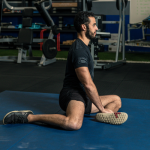
Chris demonstrates the Modified World’s Greatest Stretch, Lateral Leg Swing, Glute Bridge to Knee Hug, Glute Bridge Figure-4, and 90-90 Switch. You don’t necessarily need to perform all five every day. The bigger lesson is to stop allowing sitting to be the only position your hips practice for hours at a time.
Want more than a few individual hip exercises? Coach Chris Wilson put together a complete follow-along mobility program called Ageless Hips.
Movement Is Only Part of the Joint-Health Equation
Joint-health advice often falls into one of two camps. One side tells you that the answer is simply to exercise and move more. The other tells you there’s a supplement that will take care of everything.
We don’t think it needs to be either/or.
At Critical Bench, we’ve always looked at healthy aging from both directions. Keep the muscles surrounding your joints strong, maintain useful ranges of motion and avoid becoming unnecessarily sedentary. At the same time, good nutrition provides the raw materials your body needs to support healthy tissues.
The goal isn’t merely to make today’s stiffness disappear. It’s to maintain enough comfort, strength and mobility to continue doing the things you want to do five, 10 and 20 years from now.
That’s the thinking behind Joint Glide, our daily joint-support formula from Critical Nutrition Labs.
Nutritional Support for Aging Joints
There’s no single nutrient that magically reverses aging or “refills” a joint overnight. Joint health is more complicated than that, which is why Joint Glide uses multiple ingredients selected to support joint comfort, flexibility and mobility rather than relying on one supposed miracle compound.
The formula includes MSM, a sulfur-containing compound commonly found in joint-health formulas and studied for its potential role in joint comfort and physical function, along with glucosamine, one of the most extensively studied nutritional ingredients used for joint and cartilage support.
Joint Glide also contains pine bark extract, a concentrated source of plant compounds called proanthocyanidins; Devil’s Claw, an herb traditionally used for joint comfort and mobility; and white willow bark, a botanical with a long history of traditional use. Supporting nutrients and minerals round out the formula.
The idea isn’t that taking a capsule somehow turns a 70-year-old joint back into a 20-year-old joint. Joint Glide is designed to provide daily nutritional support for people who want to stay comfortable, mobile and active as they get older.
Don’t Make the Biggest Joint-Health Mistake
One of the biggest problems with stiff joints isn’t always the stiffness itself. It’s what happens next.
Your hips or knees start feeling stiff, so you move less. Because you’re moving less, you gradually lose some strength and mobility. Everyday activities become a little more difficult, so you begin avoiding those activities too. Before long, you’ve created a cycle where discomfort leads to less movement, and less movement makes it even harder to maintain the physical abilities you once took for granted.
The stairs become something you’d rather avoid. Getting onto the floor is no longer worth the trouble. A long walk sounds less appealing. Traveling becomes more difficult because you’re worried about how much walking will be involved. Even playing with your kids or grandkids can require more thought than it used to.
That’s the cycle we want to interrupt. The goal of joint health isn’t simply to have joints that don’t bother you. The bigger goal is maintaining the freedom to use your body.

Why Your Hips Deserve Special Attention
Your hips sit right in the middle of the kinetic chain, connecting the upper and lower body and playing a major role in walking, climbing, bending, squatting and getting out of a chair.
When your hips aren’t moving well, your body doesn’t simply stop moving. It finds another way to accomplish the task. You may shorten your stride, change the position of your pelvis, rely more heavily on your knees, or compensate somewhere else.
That’s why nutritional joint support can only be part of the strategy. You can take every supplement in the world, but you still need to move your hips.
If you’ve spent years sitting at a desk, driving, watching television and generally moving less than you did when you were younger, it may be worth deliberately working on some of the ranges of motion you’ve stopped using.
For people who want more structure than a few individual mobility exercises, that’s where Ageless Hips comes in.
What If Your Hips Could Move Younger?
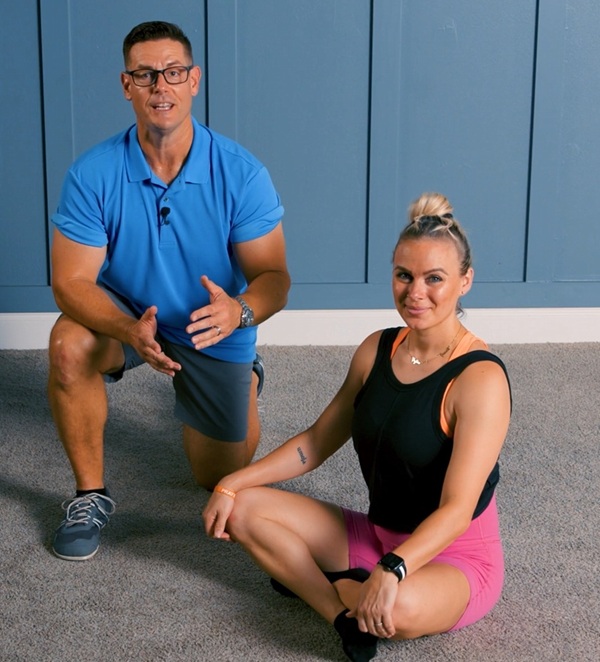
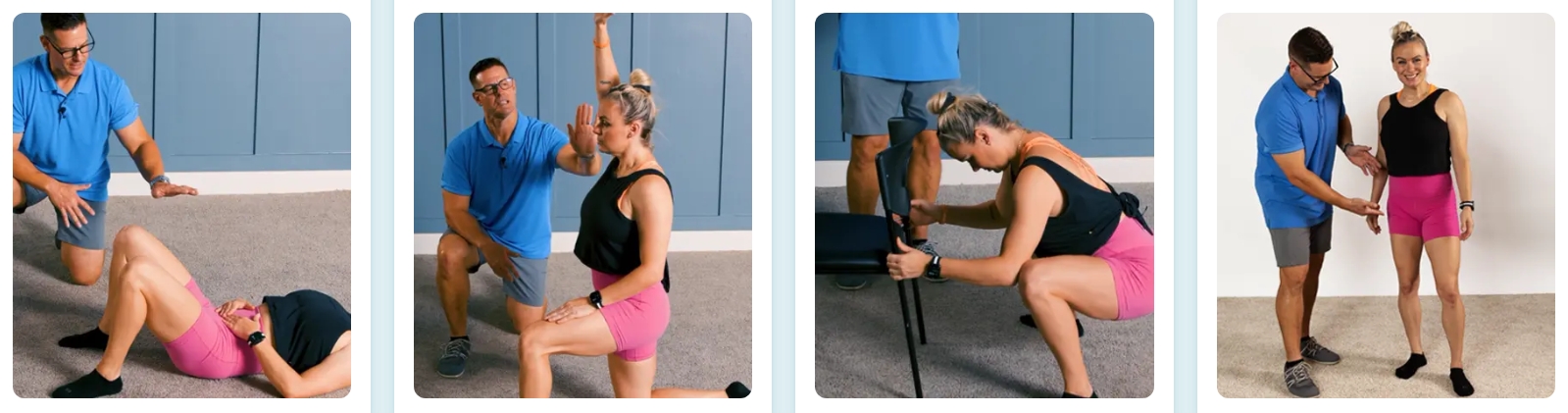
Ageless Hips is a follow-along mobility program led by Critical Bench coach Chris Wilson. Instead of randomly stretching whatever happens to feel tight that day, Chris takes you through a structured 10-Minute Hip Decompression Method built around releasing tension, decompressing, reactivating muscles and restoring healthier movement patterns.
The program is especially relevant if you notice that your hips feel stiff after sitting or driving, your stride has become shorter, getting down to the floor isn’t as easy as it used to be, or you simply don’t feel like your hips move the way they did years ago.
Think of Joint Glide as daily nutritional support for joint comfort, flexibility and mobility, while Ageless Hips gives you a structured way to actually work on the movement of one of the most important joints in your body.
Give Your Hips 10 Minutes
If years of sitting, driving and repeating the same positions have left your hips feeling tighter than they used to, Coach Chris Wilson created Ageless Hips to help you start taking that movement back.
Follow the 10-Minute Hip Decompression Method from home and work on the hips, core and glutes together instead of randomly stretching whatever happens to feel tight.
5 Simple Ways to Fight “Joint Drought” Starting Today
Supporting healthier movement doesn’t require completely overhauling your life. A few basic habits practiced consistently can make a much bigger difference than occasionally going all-in on the newest joint-health trend.
- Break up long periods of sitting. If you’ve been sitting for an hour or more, stand up and walk around for a few minutes. Take the stairs, walk to the mailbox, refill your water or simply make a lap around the house. Your body doesn’t always need another complicated biohack. Sometimes it simply needs you to get out of the chair.
- Move your hips every day. Spend a few minutes taking your hips through comfortable ranges of motion. You don’t need a brutal stretching session, and more isn’t necessarily better. Consistency matters far more than occasionally trying to force yourself into positions your body isn’t prepared for.
- Maintain your strength. Mobility without strength isn’t the goal. Strong glutes, legs and core muscles help support the hips and knees and preserve your ability to perform everyday tasks like climbing stairs, carrying groceries and standing up from a chair.
- Support your joints nutritionally. Start with the fundamentals: eat enough protein, emphasize nutrient-dense whole foods and stay adequately hydrated. If you want additional daily joint support, Joint Glide provides a convenient way to add multiple joint-support ingredients to your daily routine.
- Keep doing things. Walk. Garden. Lift weights. Golf. Swim. Travel. Play with your kids or grandkids. Take the stairs when appropriate. The point of caring for your joints isn’t to protect them from life. It’s to help you keep living it.
Getting Older Doesn’t Mean You Have to Stop Moving
Getting older is real, and pretending otherwise doesn’t help anyone. Bodies change. Recovery changes. Maintaining muscle requires more attention. Joint problems become more common, and some people will develop injuries or medical conditions that require professional treatment.
But there’s an enormous difference between acknowledging aging and automatically surrendering to it.
If getting out of a chair doesn’t feel as effortless as it did 20 years ago, pay attention to what your body is telling you. Look at how much of your day you’re spending sitting. Keep your legs strong. Give your hips opportunities to move through different ranges. Eat well and give your joints the nutritional support they need.
Don’t automatically assume every bit of stiffness or lost mobility is something you simply have to accept because you’re over 50.
Your body was built to move. Keep giving it reasons to.
References
Temple-Wong MM, et al. Hyaluronan concentration and size distribution in human knee synovial fluid: variations with age and cartilage degeneration. Arthritis Research & Therapy. 2016.
Marian M, et al. Exploring the lubrication mechanisms of synovial fluids for joint longevity — A perspective. Colloids and Surfaces B: Biointerfaces. 2021.
Boukabache A, Preece SJ, Brookes N. Prolonged sitting and physical inactivity are associated with limited hip extension: A cross-sectional study. Musculoskeletal Science and Practice. 2021.
Fam H, Bryant JT, Kontopoulou M. Rheological properties of synovial fluids. Biorheology. 2007.
Grgic J, et al. Reference values for the five-times-sit-to-stand test: a pooled analysis including 45,470 participants from 14 countries. GeroScience. 2025.
Five-repetition chair-stand test vs. handgrip strength: Which better predicts mortality risk? A follow-up study in 43,605 middle-aged and older adults. Brazilian Journal of Physical Therapy. 2025.
SPPB or chair stand test: Which is associated with mortality risk in high-functioning older adults? Maturitas. 2026.
Normal human synovial fluid exhibits stable hyaluronic acid and proteoglycan 4 levels across age and sex. 2026.
Medical Disclaimer: This article is for informational and educational purposes only and is not intended to diagnose, treat, cure or prevent any disease. Joint pain or loss of mobility can have many causes. Consult a qualified healthcare professional regarding persistent or worsening joint symptoms.