There was probably a time when going to bed was pretty simple. You got tired, laid down, found a comfortable position and fell asleep.
These days, getting comfortable can feel more complicated.
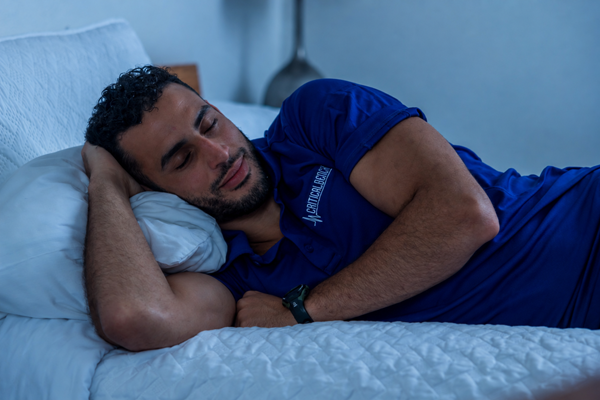
You roll onto your side, but your bottom arm is trapped underneath you. So you slide it under the pillow. Ten minutes later your hand starts tingling or your arm falls asleep. You pull the arm out and put it in front of you, but now your shoulder doesn’t feel right.
Then there’s the other arm. Where exactly is that supposed to go? You can’t just throw it across the bed unless your spouse has agreed to become part of your sleep system.
Eventually you roll onto your back. Your shoulder feels better, but now you’re snoring. Your spouse gives you a nudge, you roll back onto your side, and the whole process starts again.
Sound familiar?
Getting comfortable in bed can become surprisingly complicated as we get older. And just like getting out of a chair can start feeling different after 50, it’s tempting to blame everything on age.
But there may be something much simpler worth looking at: how are you actually positioning your body for the six, seven or eight hours you’re in bed?
Your mattress matters, but so does your pillow. So does the position of your neck, shoulders and arms. And if you snore, the position you sleep in may even affect how well you’re breathing during the night.
Why Your Sleeping Position Matters More Than You Think
Most of us pay far more attention to our posture while we’re awake than while we’re asleep. We’ll adjust the seat in the car, buy an ergonomic office chair, raise the computer monitor and think about our posture when lifting weights.
Then we go to bed and spend seven hours with our head resting on whatever pillow happened to be on sale at the department store.
That never made much sense to us.
Your pillow has a relatively simple job, but it’s an important one. It needs to support the space between your head and the mattress while allowing your neck to rest in a reasonably comfortable position.
That job changes depending on how you sleep. When you’re on your side, your shoulder creates considerably more space between your head and the mattress. When you’re on your back, that space changes. Roll onto your stomach and now your head usually has to rotate to one side so you can breathe.
Research into pillows isn’t nearly as definitive as some pillow companies would have you believe. There isn’t one scientifically proven pillow shape that’s perfect for every human being. However, research does suggest that pillow height and support can influence cervical alignment, pressure and muscle activity.
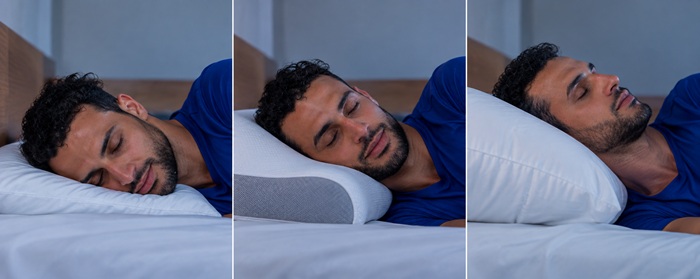
Which brings us to one of the most annoying parts of side sleeping.
Why Does Your Arm Fall Asleep?
If you’ve ever woken up with a hand that feels like it belongs to somebody else, you know the feeling. You shake it, move your fingers and change positions. Eventually the pins and needles usually disappear.
Temporary numbness after sleeping in an awkward position can happen when sustained pressure irritates or compresses a nerve. Depending on the position, circulation can also be temporarily affected.
The problem for side sleepers is obvious: there’s an entire shoulder and arm underneath you.
A lot of people solve this by sticking the bottom arm underneath the pillow. That may initially feel comfortable because you’re essentially using your arm to add height and support underneath your head. But now you’re asking your shoulder and arm to stay in that position while the weight of your head and upper body presses into the bed.
Here’s our take on it:
Your arm shouldn’t have to do your pillow’s job.
If the only way you can get your head comfortable is by folding an arm underneath the pillow, the pillow itself may not be giving you the support you want in that position.

Of course, persistent numbness, weakness or tingling that doesn’t resolve when you change positions is different. That’s something worth discussing with a healthcare professional rather than blaming indefinitely on your pillow.
Then There’s Your Shoulder
The arm isn’t the only thing caught underneath you. Your downside shoulder is also taking pressure against the mattress.
That’s one reason there isn’t a universal “best” side-sleeping position. Your anatomy, shoulder mobility, mattress, pillow height and arm position all interact.
And here’s where people sometimes make things worse while trying to get comfortable. The shoulder doesn’t feel right, so you roll slightly forward. Now your upper arm comes across your body, your upper back rotates, your head moves and your pillow compresses differently.
Eventually you’ve built some strange position that feels comfortable at 10:30 p.m. but doesn’t feel nearly as good when you wake up at 3:00 a.m.
You don’t need to sleep like you’re lying at attention. Bodies naturally change position during the night. But if you routinely wake with the same sore shoulder, stiff neck or “kink” around your shoulder blade, we think it’s worth looking at your sleeping setup instead of automatically accepting it as another consequence of getting older.
Your Neck Doesn’t Sleep By Itself
This is another place where sleep advice gets oversimplified. People talk about the neck, shoulder and back as if they’re completely separate structures.
They’re not.
Your head sits on your cervical spine. Your cervical spine transitions into your upper back. Your shoulder blades interact with the rib cage and upper back. Muscles and connective tissues span these regions, so changing one part of your sleeping position can influence what happens somewhere else.
That doesn’t mean every backache starts in your neck. It does mean that the position you maintain for hours at a time deserves some consideration.

If your pillow is extremely high while you’re sleeping on your back, your head may be pushed farther forward than you find comfortable. If it’s too low for your anatomy while you’re on your side, your head may drop toward the mattress. And if you’re constantly using your arm to make up the difference, you’ve added another variable.
This is why we’re skeptical whenever somebody declares that everyone needs a soft pillow, hard pillow, thin pillow, giant pillow or no pillow at all.
The goal isn’t to follow a pillow rule. The goal is to find a setup that lets your body relax and stay comfortable.
And comfort isn’t the only reason your sleeping position matters.
What About Snoring?
Snoring isn’t just a noise coming out of your mouth. It happens when airflow causes relaxed tissues in the upper airway to vibrate during sleep, and the position you sleep in can make a difference.
Research in people with obstructive sleep apnea has repeatedly found that breathing disturbances can be worse when sleeping on the back than on the side. One large study involving 3,843 patients found substantially more apnea-hypopnea events in the supine position than in the lateral position.
You may have noticed this in your own bedroom. Maybe your spouse barely makes a sound on their side, then rolls onto their back and five minutes later you’re reaching for the earplugs.
That’s worth paying attention to.
It doesn’t mean side sleeping magically fixes snoring, but it does reinforce something we’ve been talking about throughout this article: sleeping position matters for more than comfort. It can affect breathing too.
One important caveat: loud habitual snoring accompanied by pauses in breathing, gasping or choking during sleep, unusual daytime sleepiness or recurring morning headaches can be signs of obstructive sleep apnea. That’s something to discuss with a healthcare professional rather than trying to solve yourself with a new sleeping position.
For everybody else who’s simply trying to get more comfortable, breathe well and stop rearranging themselves all night, there’s another piece of the equation we haven’t talked much about yet.
Your pillow.
So What Should a Pillow Actually Do?
We think the pillow industry has made this unnecessarily complicated. Cooling gel, space-age foam, fifteen layers, luxury bamboo-infused whatever.
Those features may be nice, but start with the basic question:
Can you actually get comfortable on the thing?
A useful pillow should support your head and neck in the position you prefer to sleep in without requiring you to constantly bunch it up, fold it over or stick your entire forearm underneath it. Ideally, you should stop thinking about your pillow altogether once you fall asleep.
That’s what attracted us to the design that became the BreatheMAX Pillow.
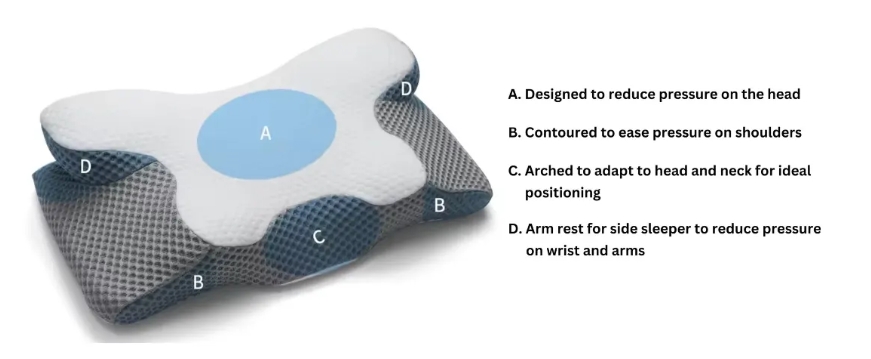
Instead of being one flat slab of foam, BreatheMAX was designed with different contours for the head, neck, shoulders and arms. For side sleepers in particular, that gives you more options for getting comfortable without constantly bunching up the pillow or stuffing an arm underneath it.
But we also realized something pretty obvious: you can have a comfortable pillow and still be terrible at going to sleep.
That’s where Critical Bench coach Zach Zenios comes into the story.
Better Sleep Isn’t Only About the Pillow
Zach has spent years working with breathing, movement and the nervous system. He’s a licensed neurosomatic therapist and registered yoga instructor, and he developed a simple nighttime routine we call Breathing for Sleep.
The idea behind it is simple: most of us aren’t very good at transitioning into sleep.
We answer one last email, check social media, watch television, look at our phone, think about tomorrow and then turn off the light expecting our body to instantly switch from GO to SLEEP.
For some people, it doesn’t work that way.
Breathing for Sleep uses guided breathing exercises to give you something deliberate to focus on during that transition. Instead of lying there thinking about tomorrow’s problems, you’re paying attention to something happening right now: your breathing.
That’s why we ultimately paired the physical BreatheMAX Pillow with Zach’s complete Breathing for Sleep program. One is about getting your body comfortably positioned in bed. The other is about what you do once you’re there.
LISTEN: Breathing for Better Sleep

Want to go deeper into the connection between breathing and sleep? Critical Bench coach Chris Wilson sat down with Zach on the Strong By Design podcast to talk about nighttime breathing, why the brain can have trouble shutting down, tongue posture, snoring and ways to improve sleep naturally.
Listen to Strong By Design Ep. 343: Breathing for Better Sleep →
And right now there’s a pretty unusual reason we’re making the entire BreatheMAX system available so cheaply.
We Bought Too Many Pillows
There’s no complicated marketing story here. We have more BreatheMAX Pillows sitting in inventory than we want, and every month they sit in the fulfillment warehouse, we pay to store them.
So instead of continuing to pay storage fees, we’re clearing out the excess inventory.
Right now you can get the BreatheMAX Pillow plus the complete Breathing for Sleep program for just $29, including FREE shipping in the USA and Canada.
That’s 70% OFF the regular $79 price.
Get the Complete BreatheMAX Sleep System for 70% OFF
Regularly $79. Now $29 + FREE Shipping in the USA & Canada
You get:
- BreatheMAX Ergonomic Pillow
- Breathing for Sleep Coaching Video
- Breathing for Sleep Audio Routine
- Breathing for Sleep Handbook
- The 10 Worst Sleep Mistakes Video
- Sleep Like a Baby Checklist
- The Truth About Melatonin
- 60-Day Money-Back Guarantee
GET BREATHEMAX + BREATHING FOR SLEEP FOR $29 →

What’s the Best Sleeping Position After 50?
Here’s where we’re probably going to disappoint anyone looking for a magic answer.
There isn’t one.
Your body isn’t identical to anyone else’s, and the position that lets one person sleep comfortably for eight hours can have somebody else rearranging pillows all night. Each of the common sleeping positions has advantages and tradeoffs.
Side Sleeping
We’re fans of side sleeping if you’re actually comfortable there.
For people whose snoring or obstructive breathing is position-dependent, lateral sleeping may be preferable to sleeping flat on the back. Research in people with obstructive sleep apnea consistently shows that sleeping supine can worsen breathing events in many patients.
But side sleeping creates its own mechanical problem. Your shoulder is now between your torso and the mattress, which means there’s more distance between the mattress and your head than when you’re lying on your back.
Then there’s the arm.
Our preference is to avoid deliberately trapping the bottom arm underneath your body or using it as an extra pillow if that repeatedly leaves you numb or uncomfortable. Give the arm somewhere to go in front of you and let the pillow support your head.
That sounds ridiculously simple until you’ve spent 20 minutes trying to figure out where to put your arm.
Back Sleeping
Back sleeping can feel great for some people’s necks and shoulders because neither shoulder is underneath the body. It also solves the bottom-arm problem completely.
The tradeoff is breathing.
For people prone to positional snoring or positional obstructive sleep apnea, sleeping on the back can worsen upper-airway obstruction. If your spouse tells you that you barely snore on your side but sound like a chainsaw when you roll onto your back, that’s useful information.
Pay attention to it.
Stomach Sleeping
Some people love sleeping on their stomach and have done it their entire lives. We’re not going to tell them they’re sleeping “wrong.”
But stomach sleeping generally requires turning the head substantially to one side in order to breathe, which can make pillow choice and neck comfort more challenging.
If you wake up comfortable and refreshed, great. If you wake every morning feeling like somebody twisted your head around overnight, it may be worth experimenting with another position.
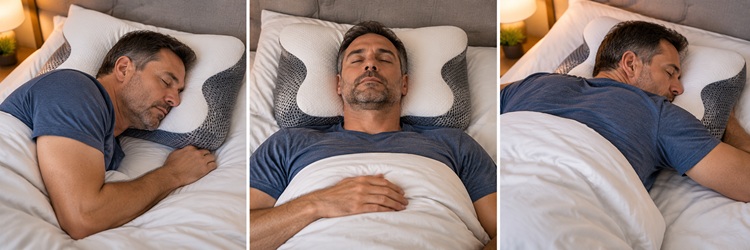
TRY IT TONIGHT: Stop Searching for the “Perfect” Sleeping Position
Instead, pay attention to what your own body is telling you.
When you get into bed tonight, don’t immediately assume your usual position. Notice where your bottom arm goes and whether your shoulder feels comfortable. Pay attention to whether your head feels like it’s dropping toward the mattress or being pushed away from it.
Can your neck actually relax? Do you constantly rearrange your pillow? Does one position make your arm tingle?
And if you share the bed with somebody, ask a useful question:
“When do I snore the most?”
Your spouse may know more about your nighttime breathing than you do. After all, you’re not awake to hear it.
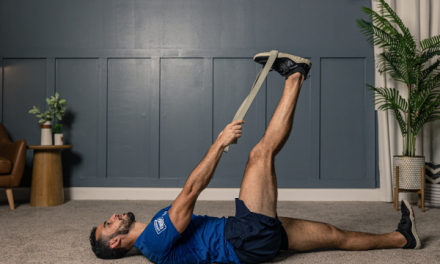
TRY THIS: A 5-Minute Stretch Before Bed
Getting comfortable isn’t only about your pillow or sleeping position. If you’ve spent most of the day sitting, driving, working at a computer or training, you may simply be bringing a lot of stiffness into bed with you.
In this quick follow-along routine, Critical Bench coach Brian Klepacki takes you through five minutes of stretching you can do before bed to loosen up and help your body transition out of the day.
You don’t need to turn bedtime into another workout. Five minutes of easy movement, a few minutes of deliberate breathing and a comfortable sleeping setup may be a much better nighttime routine than scrolling on your phone until your eyes finally close.
5 Things We’d Try Before Buying a $4,000 Mattress
Sleep has become a massive industry, and there’s always somebody willing to sell you the next solution.
Before replacing everything in your bedroom, we’d start smaller.
1. Experiment With Pillow Height
Don’t assume thicker means more supportive. The amount of support you need depends partly on your sleeping position and anatomy.
The question isn’t whether the pillow is thick. It’s whether your head and neck feel comfortably supported in the position you actually sleep in.
2. Get Your Arm Out From Under You
If you repeatedly wake up with the same arm numb, stop putting it in the same place every night and expecting a different result.
Move the bottom arm slightly forward. Try bending the elbow differently. Give the upper arm somewhere comfortable to rest. And make sure you’re not using your bottom arm simply because the pillow itself isn’t supporting your head comfortably.
3. Pay Attention to Your Shoulder
If you always sleep on the same side and always wake with the same shoulder irritated, that’s worth noticing.
Try the other side. Adjust the arm position. Look at the pillow and mattress setup.
Persistent shoulder pain can have causes that have nothing to do with sleep, but spending hours every night pressing that shoulder into the mattress certainly matters to how comfortable you are.
4. Find Out When You Snore
Don’t guess. Ask.
You may discover that your snoring changes dramatically depending on your position.
If you’re experiencing loud habitual snoring along with gasping, breathing pauses, excessive daytime sleepiness or recurring morning headaches, don’t just keep buying pillows. Get evaluated. Those can be warning signs of obstructive sleep apnea.
5. Give Yourself a Transition Into Sleep
We think this one gets overlooked.
You wouldn’t sprint around the block and expect your heart rate to return to normal the instant you crossed your driveway. Yet plenty of us spend the evening working, worrying, watching, scrolling and consuming information right up until the moment we expect ourselves to fall asleep.
Give yourself a transition. Dim the lights, put the phone down, get comfortable, slow things down and try a few minutes of deliberate breathing.
What If Getting Comfortable Isn’t Your Only Sleep Problem?
A better pillow and sleeping position can improve the physical environment around sleep, but they can’t address everything.
You can have the world’s most comfortable pillow and still struggle to wind down at night. Stress, caffeine, alcohol, light exposure, your schedule and other lifestyle factors can all play a role in sleep quality.
Some people also choose nutritional support as part of their nighttime routine.
Try Sleep Revive FREE for 30 Days
Sleep Revive from Critical Nutrition Labs was formulated to provide nutritional support for relaxation and restful sleep.
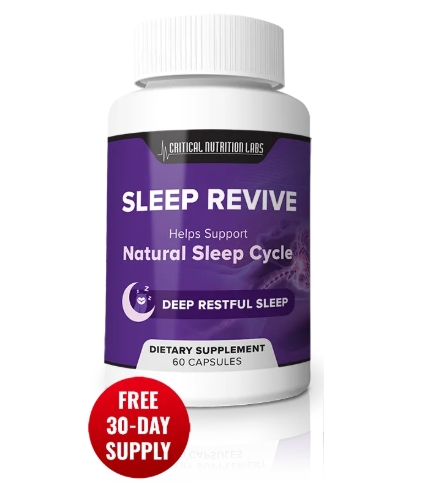
Right now you can get your first 30-day supply FREE and just pay $7.99 shipping & handling.
After your first bottle, you’ll receive a new 30-day supply for $39.94 + $7.99 S&H per month. Cancel anytime.
GET MY FREE 30-DAY SUPPLY →
Maybe We Need to Stop Treating Sleep Like Dead Time
This is probably our biggest takeaway from all of this.
People will spend an hour debating the ergonomics of an office chair they use eight hours a day, then sleep for roughly the same amount of time with a pillow they’ve hated for three years.
That doesn’t make much sense.
Sleep isn’t dead time where your body shuts off and nothing matters until morning. You’re still breathing. Your muscles and joints are still positioned somewhere. Your head still has weight. Your shoulder is still underneath you. And your body still has to be comfortable enough to stay asleep.
Getting older doesn’t mean you need to obsess over achieving some scientifically perfect sleeping posture. But if you’re spending every night rolling around, moving your arms, fighting with your pillow, waking with your hand asleep, dealing with a stiff neck or getting elbowed because you’re snoring again, pay attention.
Your body may not be telling you that you’re old.
It may simply be telling you it’s time for a better setup.
References
Caggiari G, et al. What type of pillow should be used in patients with cervical pain? A systematic review. 2021.
Dynamic versus fixed pillow height systems and cervical muscle function: a randomized crossover trial. 2026.
Differential effects of sleep position and sleep stage on the severity of obstructive sleep apnea. Journal of Sleep Research. 2024.
Analysis of positional obstructive sleep apnea features in 12,000 patients at a sleep center. 2026.
Mayo Clinic. Sleep Apnea: Symptoms and Causes.
Medical Disclaimer: This article is for informational and educational purposes only and is not intended to diagnose, treat, cure or prevent any disease. Persistent numbness, pain, breathing problems or sleep disturbances can have many causes. Consult a qualified healthcare professional regarding persistent or worsening symptoms.